The Astrology Center of America, 207 Victory Lane, Bel Air, MD 21014
Tel: 410-638-7761; Fax:410-638-5154; Toll-free (orders only): 800-475-2272
Home Author Index Title Index Subject Index Vedic Books Tarot E-Mail: Dave


The Sabian Astrology Books of Marc Edmund Jones


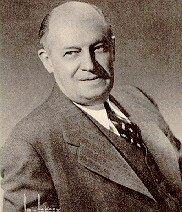
Marc Edmund Jones (1888 - 1980) was described by a fan as a great nuts & bolts astrologer. He had a varied life: High school dropout (eventually earning his Ph.D. in New York), early screen writer (in New York, before there was a Hollywood), a Presbyterian clergyman, astrologer (of course), occult book editor for David McKay's book company in Boston, author, lecturer, teacher, philosopher, etc. With psychic Elsie Wheeler, he invented the Sabian Symbols in Balboa Park in San Diego (then a small beach town) in 1925. As an outgrowth of his religious, philosophical & astrological studies, he founded the Sabian Assembly, which many of his astrological admirers are only dimly aware of. Continued below

Books by Marc Edmund Jones:

Indicates a book on our Top Ten list. If you would like to find more books like it, click on the star.

ESSENTIALS OF ASTROLOGICAL ANALYSIS, Illustrated with the horoscopes of 174 well-known people - Marc Edmund Jones, $34.00
Back in Print. Contents: Part One: Perspective in the horoscope (Nature of Astrology; Natural Disposition; Temperament Type; Self-Ordering; Focal Determinators). Part Two: 16 Point Analysis (Over-all Perspective; Role to be Played; Relationship with Others; Immediate Intimacies - Comparison of Horoscopes; Roots of Integrity; Personal Threshold; Incentive Threshold; Primitive Impulse; Personal Spontaneity; Personal Sensitiveness; Effective Initiative; Effective Appreciation; Effective Set of Mind; Vocation; Transcendent Pointing; Transcendent Receptivity; Transcendent Fulfillment; Appendix; Index.
Comment: From the back cover: [This] is a wonderfully complete exposition of the astrological horoscope that presents the whole-view approach, by stellar art, to an understanding of human personality in each unique pattern of its potentials. This book is the most widely-acclaimed and often-referred-to presentation of Sabian astrology, as developed by Dr. Marc Edmund Jones. ... This landmark text on astrology includes a detailed explanation of the seven temperament types, or the special patterning of the horoscope into the bowl, bucket, bundle, locomotive, seesaw, splash or splay configurations. Also included is a comprehensive chapter on focal determinators, or the T cross, grand square, grand trine, grand sextile, trigger square, hemisphere emphasis by houses or signs, singleton planet, sole dispositor, satellitium, fanhandle, preponderance by triplicity, quadrature, quaternion or aspects of retrogradation, special dignification of planets and more. Sabian Publishing Society/Trafford, 455 pages.


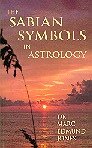
THE SABIAN SYMBOLS IN ASTROLOGY - Marc Edmund Jones, $22.95
First published in 1953, this classic book is a ground-breaking commentary on each of the 360 degrees of the zodiac: The symbolic picture, psychological significance, key-word abbreviations, positive/negative influences and relationships between symbols. Also included are detailed explanations of the origin of the symbols & their use in natal, horary, mundane and rectified charts. Illustrated with over 1000 horoscopes of famous people. An essential book for every student of astrology. 437 pages including an index to Sabian symbols, index to keywords, and a general index. Aurora, paper.


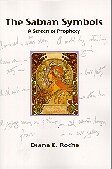
SABIAN SYMBOLS, A SCREEN OF PROPHECY - Diana Roche, $26.00
Contents:
Preface; Introduction;

1. The origin & history of the Sabian Symbols: The early influence of Charubel; The Mesopotamian connection; The plan; The event; Early work on the Sabian Symbols; The Sabian Symbols in Astrology; Today

2. Methods & Techniques: Determining which degree to use; Transiting planets; Chart angles; New & full moons; The Sabian Symbol at sunrise; The Sabian Symbol at moonrise; Chart rectification; Horary charts; The astrological formula: Polarity, Quadrature, Triplicity, First & second halves of signs, Five degree units of each half sign; The hidden genius of the formula: Fivefold dimension of self-expression; Divinatory Techniques: Framing the question, Calculator method, Mental focus, Drawing slips, Using a clock, Using dice, Using playing cards, Journals & scrapbooks, Using your imagination

3. The Sabian Symbols in practical & everyday use: Cycles; Signatures; Literal interpretation; Astrological charts; Subtlety; Divination

4. Negative or reversed symbols

5. The Sabian Symbols: Aries to Pisces

Chapter notes; Index to Sabian Symbols; Index to keywords; General index.

Comment: A new look at the Sabians, by a retired administator of Jones's Sabian Assembly. Illustrated with Marc Edmund Jones's original hand-written Sabian notes, from that long ago day in 1925 in San Diego. This is the most comprehensive book on the Sabian Symbols to date. Includes: In depth, user-friendly text, daily guide for each symbol, reproductions of original index cards of Dr. Jones, thousands of additional keywords, new divinitory methods & techniques, helpful themewords & phrases, indexes for images, keywords & themes. The clearest exposition, the easiest of the three books to use.

Trafford Publishing, 430 paper.
See also Dane Rudhyar


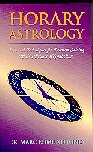
HORARY ASTROLOGY: PRACTICAL TECHNIQUES FOR PROBLEM SOLVING WITH A PRIMER OF SYMBOLISM - Marc Edmund Jones, $18.95
Marc Edmund's work in horary predates the current English revival of the 1980's & is an alternative view to present ideas. A complete text in 460 pages that begins with this excerpt from Ecclesiastes: "There is a time to keep & a time to throw away", which reminds us that not all horary charts can be read. Contents: Significant sensitiveness; Charting the pertinent moment; Putting experience in place; Phrasing and locating the question; The yes-and-no technique; The time measure; Planetary dynamics; The judgment chart; The use of natal methods; Multiple questions; Parallels of declination; Inaugural horoscopes; Special fields of judgment; The method of birth planets. 464 pages including a primer of symbolism and an index to the main text. Aurora, paper.


THE GUIDE TO HOROSCOPE INTERPRETATION (hardcover) - Marc Edmund Jones, $14.00
This is the famous book on Planetary Patterns, which Marc Edmund was the first to discover: The Splash, Bundle, Locomotive, Bowl, Bucket, Seesaw & Splay. Each of these chart types can be identified merely by looking at the chart. A bundle, for example, has all the planets within 120 degrees. A locomotive, by contrast, has a 120 degree "hole". So quite naturally the two get on well together, each completing the other. Appendices: The astrological essentials; The focal determinators; Supplementary horoscope date; Notes on example horoscopes. 195 pages including index. Sabian Publishing, hardcover.


THE COUNSELING MANUAL IN ASTROLOGY - Marc Edmund Jones, $18.00
How large-scale patterns (& some specific details) in a chart relate to temperament, disposition, self-integration, mental chemistry, economic competence, dynamic aptitude, key emotionality, etc. Also focal determinators, T & X crosses, triggers & grand aspect, preponderances by planet or house, more. The last major work by Marc Edmund. After the opening remarks, the bulk of the book is a series of 21 examples of orientation analysis, where the author demonstrates his chart reading skills. 197 pages including index. AFA, hardcover.


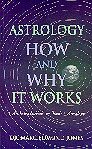
ASTROLOGY, HOW & WHY IT WORKS - Marc Edmund Jones, $16.95
It might be helpful to think of Marc Edmund's writing in the same light as his friend & contemporary, Dane Rudhyar: As much philosophical/psychological as practical. In this book, Houses as horizons, Signs as characteristics, Planets as potentialities. Everything you need to learn basic astrology is in here somewhere. 437 pages including index. Aurora, paper.


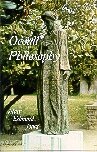
OCCULT PHILOSOPHY: An introduction, the major concepts, and a glossary - Marc Edmund Jones, $34.50
Contents: Foreword

An Introduction to Occult Philosophy: 1. The meaning of philosophy; 2. The historical roots of occultism; 3. The four profane mysteries; 4. The seven basic truths.

The Major Concepts of Occult Philosophy: 5. Individual perspective in time; 6. Individual perspective in space; 7. Existence identified in pattern; 8. Existence identified in consciousness; 9. Experience identified in being; 10. Experience identified in self; 11. Social perspective in integration; 12. Social perspective in manifestation.

A glossary of occult philosophy; Index

Comment: From the back of the book: Here is a clear & lucid exposition of the Profane Mysteries, the Lesser or Lunar Mysteries, and the Greater or Solar Mysteries. These are presented in terms of (1) the popular ideas in occultism, such as the Solar Myth, belief that Anglo-Americans are the ten lost tribes of Israel, and the theory that the Shakespearian plays were written by Francis Bacon, (2) the established doctrines of an age-old esotericism concerning such matters as transmutation or the elixir of life, the adepts or Masters of Wisdom with miraculous powers, and man's destiny as charted through karma & reincarnation, and (3) the organization of all existence and experience on a Pythagorean basis of number, a Plotonic structure of operational concepts, and an Aristotelian organization through functional or pragmatic logic. Ths history of occult origins & development is given in considerable detail, together with a thorough account of the various schools of thought & points of view. Bibliographical references are unusually full, and the glossary provides a complete orientation in both Western & Eastern terminology.

Trafford/Trefoil Publications, 436 pages.


FUNDAMENTALS OF NUMBER SIGNIFICANCE - Marc Edmund Jones, $18.50
Here's some of what this book says about itself: "This is an autobiographical account of what one individual has accomplished in bringing man's ancient astrology to a modern effectiveness. The story of the golden age of the horoscope in Greco-Roman times, with its decline into tawdry fortunetelling & consequent virtual disappearance in the Christian world until its gradual renaissance in the late medieval period & its recent almost complete re-establishment in more respectable modern form, is told in interesting detail." 408 pages including index. Sabian Publishing, hardcover.


The Astrology Center of America

207 Victory Lane, Bel Air, MD 21014
Tel: 410-638-7761; Fax:410-638-5154; Toll-free (orders only): 800-475-2272

Home Author Index Title Index Subject Index Vedic Books Tarot E-Mail: Dave


Established 1993, The Astrology Center of America is owned & operated by David Roell.
This entire site (AstroAmerica.com) is copyright 1996, 1997, 1998, 1999, 2000 by William R. Roell.
All rights reserved.


Continued from top
In Marc Edmund we see the result of a number of different influences. Astrologically, he is heir to Alan Leo's great simplification of the subject which enabled him - and a number of others - to deny a direct cause and effect relationship between astral bodies (planets, signs, etc.) & human beings. This spared us the "fatalistic" aspects of astrology. In stripping out the details of the subject, his philosophical orientation opened the door to the abstract psychological interpretations we have today. In comparing his writing with that of his friend, Dane Rudhyar, Marc Edmund's has few of the Theosophical fingerprints present in the Dane's work. Note that Project Hindsight is a reaction against the results of Leo's astrological simplification of a century ago, and, hence, against the kind of astrology which Marc Edmund represents. What Robert Hand & Project Hindsight are promoting, folks, is fatalism all over again.

Philosophically, Marc Edmund is a Presbyterian minister. Since we are trying to make some fine distinctions on this website, we will briefly sketch the difference between the Presbyterians and the Roman Catholics they split from. The Church is based on the ritual ceremony of the Mass, which, according to some may be the external representation of a white magic ceremony of unknown power. The post-Reformation churches are based on Biblical study and little else. Consequently, Catholics think of Christianity in terms of ceremony, while Presbyterians - for example - think of their Christian faith in terms of beliefs, or analysis based on acceptance of some external authority (eg, the Bible). We are not the first to point out the similarities between post-Reformation ministers and college professors, or even political ideologues. The habit all three have of dressing in suits & ties simply reinforces our point.

Marc Edmund's philosophically based Christian religious beliefs form the basis of the Sabian Assembly, not in terms of what the Sabians believe, nor what they do, but in the belief that groping towards ideals represents religion rather than philosophy - a common post-Reformation mistake, by the way, which classical Greek philosophers would never make. Astrologically, Marc Edmund expresses this most clearly in his book, Horary Astrology. Every other horary book (see Lilly's classic work) is a long list of what amounts to magical formulas. As a minister lacking a magical religious foundation, Marc Edmund's horary book is a list of philosophical traits. Were it otherwise, his horary book would contradict his religious beliefs. Nor was this by accident. There are very few books on horary, even today. Marc Edmund had to learn traditional horary (such as from Simmonite's book, which we can get) so he could recast it in his own terms. Marc Edmund's original horary book was published in 1942 with a revised & expanded edition in 1971. Immediately thereafter Derek Appleby started the horary revival in London, not with Marc Edmund's new book, but with a battered old copy of Lilly's Christian Astrology of 1659. How this conflict between old and new will end, how it may be blended if not resolved, remains to be seen.

The Sabian Assembly has its own website, dedicated to Marc Edmund & his work. Go & check it out.

Click here to go to the start of the books