The Astrology Center of America, 207 Victory Lane, Bel Air, MD 21014
Tel: 410-638-7761; Toll-free (orders only): 800-475-2272
Home Author Index Title Index Subject Index Vedic Books Tarot E-Mail: Dave


Reinhold Ebertin


Photo courtesy of
his son, Baldur
Reinhold Ebertin, 1901-1988, came to Uranian astrology, and, according to the story, was denied permission to use the new Transneptunians in his work. So he reduced the Uranian system to the 90 degree dial, 45 degree graphic ephemeris and half sums (eg, midpoints). His use of these materials was brilliant. For those of you who don't know what these 45 or 90 degree things may be, the short answer is that they are methods of reducing all hard aspects to conjunctions on a wheel or graph. By means of this simplification, a powerful means of analysis was created. Here is what we think is a complete list of his available books:


See also Cosmobiology

Indicates a book on our Top Ten list. If you would like to find more books like it, click on the star.

Have you read any of these books? Are you a fan of Reinhold Ebertin? Want to tell the world about them? Email us!
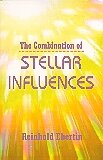
THE COMBINATION OF STELLAR INFLUENCES - Reinhold Ebertin, translated by Dr. Alfred G. Roosedale & Linda Kratzsch, $24.95
Contents:

Introduction: Cosmobiological correspondences of the human body; Biological correspondences; Order of acupuncture meridians according to the quincunx; Interpretation of the combination according to Ebertin; Interpretation of the combination according to the rules laid down by Witte

Bibliography & footnotes

The yearly rhythm as a basis for interpretation

The Sun
The Moon
Mercury
Venus
Mars
Jupiter
Saturn
Uranus
Neptune
Pluto
The Dragon's Head
The Ascendant
The Medium Coeli (MC)

There follows the 150-ish possible pairings, starting with Sun/Moon, Sun/Mercury, Sun/Venus (etc.) & ending with Dragon's Head/MC & Ascendant/MC

Supplement, translated by Ise Hodges & Charles Harvey.

Comment: When the midpoint of two planets is aspected by a third (natal or transit), the result is a planetary picture. Everyone has some of these in their chart, they reveal much about the individual. This book is a comprehensive guide to some 750 & is essential for working with the dial. The text covers the Sun, Moon & planets, nodes & angles. Includes Ebertin's view of planets in signs & houses. With notes on Witte's concepts & the 1961 supplement to Ebertin's original book. Illustrated, with instructions. A classic.

Revised edition, new cover: February 2005.

AFA, 330 pages, paper.


Read the book? Want to tell the world? How many stars (1-5) would you give this book? Tell us!


APPLIED COSMOBIOLOGY, A 4th & revised edition of The 90 Degree Dial in Practice - Reinhold Ebertin, $19.95
Contents:

Introduction

The 90 degree dial
The evolution of the 90 degree dial
Conversion table
The chart form
Interpreting the birth chart
Solar arc directions
A prediction is wrong
The formulation & dissolution of a partnership
The Contact Cosmogram
Computing the day of an expected birth
Calculating the day for an operation
A case of illness
The versatile magnetic workboard
An infant is taken ill
Children threatened at school
Difficulties at school
The choice of an occupation according to the Cosmogram
Vocational fate & success
Winning configurations
Man in the universe
Progressed aspects
Concluding remarks

Explanation of terms used in this book
References
Table of equivalents

Comment: Back in print! Ebertin invented Cosmology. This is his own exposition of how it works, how the dial works, with many practical applications. An essential book, it has long been a classic. From the back cover:

This basic cosmobiology textbook was first printed in Germany (1949) under the title, The 90 degree Dial in Practice. After many additions & improvements it was released again in 1972 under the current title. Written by the acknowledged master, cosmobiology takes the fundamentals of the basic horoscope one step further by condensing the wheel to 90 degrees by placing the planets into their groups of cardinal, fixed and mutable. The analysis then becomes very simplified, yet with details that are astounding. Explained are the methods, interpretations, use of solar arc directions, graphic ephemeris and more. See for yourself how using cosmobiology makes astrology become a quicker and more useful tool.

AFA, 206 pages.


Read the book? Want to tell the world? How many stars (1-5) would you give this book? Tell us!


COSMIC MARRIAGE - Reinhold Ebertin, $17.95
Contents:

1. Marital disposition
2. Stellar positions in the signs
3. Significant aspects for love & marriage
4. Celestial bodies in the house of marriage
5. Midpoints
6. Comparative analysis using the 90 degree workboard

References.

Comment: Synastry & cosmobiology combine in this unique book. Cosmobiology: how comparative midpoint structures work in synastry, comparative analysis using the 900 workboard & 3600 chart, with many examples (including biwheels). Synastry: Cookbook of Sun, Moon, Venus, Mars, ascendant, through the signs; planets on the descendant, significant aspects for love & marriage. An essential book for the study of Ebertin & his astrology.

AFA, 175 pages.


Read the book? Want to tell the world? How many stars (1-5) would you give this book? Tell us!


TRANSITS: What Days Favor You? - Reinhold Ebertin, $15.00
Contents:

Preface

1. The cosmogram
2. Aspects in the cosmogram
3. What is a transit?
4. How to read the ephemeris
5. Determining the transits
6. The parallels
7. Mundane aspects
8. Evaluating the transits
9. The character of the stellar bodies
10. The interpretation of the monthly prognostication
11. Sensitive points & half-sums
12. Paying attention to Medium Coli (MC) and ascendant
13. Which is the best day to realize plans?
14. Basic interpretation - the Sun
15. Basic interpretation - the Moon
16. Basic interpretation - Mercury
17. Basic interpretation - Venus
18. Basic interpretation - Mars
19. Basic interpretation - Jupiter
20. Basic interpretation - Saturn
21. Basic interpretation - Uranus
22. Basic interpretation - Neptune
23. Basic interpretation - Pluto
24. Basic interpretation - Moon's node
25. Appendix

Comment: A classic on the transiting planets, back in print. Interpretations are short and to the point, plus & minus. Here is Sun to Mars:

5. Sun to Mars
+ Energy, resoluteness, creative power, instinct, courage, ambition, striving for power, chances for success.

- (C) Rashness, irritation, obstinacy, impulsiveness, quarrelsomeness, inclination to illness and mishap. In case of illness, high temperature. Extravagant demands, overstrain. (pg. 40)

"C" indicates conjunction. The Appendix gives examples using the Contact Cosmogram (90 degree dial) and the 45 degree graphic ephemeris. I wish the illustrations were better.

AFA, 106 pages, paper.


Read the book? Want to tell the world? How many stars (1-5) would you give this book? Tell us!


TRANSITS: FORECASTING USING THE 45 DEGREE GRAPHIC EPHEMERIS - Reinhold Ebertin, $14.95

Contents:

Foreward, by Robert Hand
Explanation
Preface

The 45 degree system
Scheme to transpose positions out of the 360 degree circle into the 45 degree scale
Graphic 45 degree ephemeris
The practical application of the 45 degree ephemeris
Nixon's election configuration
Graphic ephemeris and structural picture
The assassination of Dr. Martin Luther King & Robert F. Kennedy
DeGaulle in the face of his defeat
Setting up an election forecast
The five million pound train robbery
The calculation of a birth
The correct calculation of a birth
The danger of false pronostications
The evolution of the conception cosmogram
The period of pregnancy in the graphic ephemeris
Illness during pregnancy
How to find the best day for a marriage
Marriage crisis & attempted suicide
King Constantine & Queen Annamarie
Winning in the lottery
Troubled youth
The transit combinations (TC)

Explanations of terms used in this book

Comment: A regular ephemeris has a row of planets across the top, the days of the month down the side. If you want to know where Jupiter was on the 15th of the month, you look down the list of dates until you come to the 15th, and then look across until you come to the Jupiter column & the number you find there will be Jupiter's position on the 15th of the month in question.

A graphic ephemeris is diffent. It's graphic, for one thing. In a graphic ephemeris, degrees of the zodiac go down the side of the page, and the days of the year go across the top. Planetary positions are then plotted in the resulting grid of days & degrees.

The result are more-or-less horizontal lines (ie, planets) that run from left to right on the grid, sloping ever so slightly down as they do. Faster planets slope down more sharply than slower ones. Each line has its unique planet symbol to identify it. When two lines intersect, that's a conjunction. When a line reverses direction & goes up, that's a retrograde. Because the graph typically shows a full year, and as the moon makes a complete orbit every month, the lunar line is nearly vertical. It zooms straight to the bottom, only to emerge at the top at the same point in the zodiac as it held at the bottom, and then zooms down again. Every time it crosses one of the other lines, it marks a moon-to-planet conjunction.

Got all this?

Okay. Now make it a 45 degree graphic emphemeris. In a 45 degree graphic ephemeris, instead of 360 degrees going down the side, there are three sets of 15 degrees. The first set are the four cardinal signs, Aries, Cancer, Libra, Capricorn. The second set of 15 degrees are the fixed signs: Taurus, Leo, Scorpio & Aquarius. The third & final set of 15 degrees are the mutable signs: Gemini, Virgo, Sagittarius, Pisces. So, the first degree of the Cardinal section could be 1 or 16 degrees of Aries, or 1 or 16 degrees of Cancer, or 1 or 16 degrees of Libra, or 1 or 16 degrees of Capricorn. For the moment, you do not care which sign or degree it may be.

The resulting lines on this graph are much steeper than the 360 degree graph. Now, whenever you see two lines intersect, that intersection can be a conjunction, a semi-square (45), a square, or an opposition. Get out your ruler & draw a line from that point, to the top of the graph, and you will have the date of the resulting hard aspect. And it's the hard aspects that you want to find.

You can take this one stage further & plot natal positions on the resulting ephemeris. Natal planetary positions are horizontal lines, drawn from left to right. Whenever natal lines contact an ephemeris position, you have a transit. Whenever a bunch of ephemeris lines gang up on a natal line, or when various natal lines are attacked at the same time (check the vertical axis, ie, draw a vertical line), you have an event of one sort or another.

Still confused? See an example here. Louisa May's natal chart has not been drawn on this. Hit your BACK key to get back here.

Sound useful? It surely is. And not that well-known, despite the fact that all the major software packages (Solar Fire, Win*Star, Kepler/Cosmic Patterns) will easily do it. A woman in Arizona used to print beautiful, colored, legal sized pads for the year, and many, many years ago I used to sell them, but interest never quite caught on. Judging by my Solar Fire program, they were better than what the computer will do.

This book is a useful guide, one of the few ever published. For that matter, this book was published back in 1981 by a company that seems to have disappeared in the years since. I do not know how many copies there are remaining, but when they're gone, I doubt it will be reprinted.

ASI, 147 pages.


Read the book? Want to tell the world? How many stars (1-5) would you give this book? Tell us!


RAPID & RELIABLE ANALYSIS - Reinhold Ebertin, $14.00
Contents:

List of diagrams
The bird on the roof
A firm base
Rapid & reliable diagnosis

Successful people:
1. Hans Porst
2. Arturo Toscanini
3. Carlo Schmid
4. Eva Kotthaus
5. Fritz Saenger
6. Herbert von Karajan
7. Pearl S. Buck

Changes & transformations:
8. Max Bircher-Benner
9. Karl Jaspers
10. Marie Curie

Dangerous lives:
11. Herman Buhl
12. Bernd Roesmeyer
13. Ruth Litzig

Human failures:
14. Oscar Robert Henschel
15. Robert Schneider
16. Suicide from poison

24. Short examples

Remarks

Comment: How to rapidly select the most significant features in a Cosmogram, especially those which are important to the development of the individual. With numerous detailed studies, midpoint analysis & more. From the back cover:

The aim of a diagnosis is to assemble a comprehensive picture from a series of facts, draw the appropriate conclusions and from this make a prediction. A diagnostic delineation cannot deal with a Cosmogram in its entirety and consider its every detail, but it can rapidly select the most significant features and in particular those which are important to the development of the individual.

The master of Cosmobiology presents a guide to his system of forecasting the future through the use of progressions, solar arcs and transits, illustrated with case histories.

Ebertin-Verlag, 68 pages, paper.
Read the book? Want to tell the world? How many stars (1-5) would you give this book? Tell us!


FIXED STARS & THEIR INTERPRETATION - Ebertin-Hoffman, $14.00
Contents:

Preface

Some of the history of interpretation of fixed stars
Fixed stars & their interpretation (interpretations for 73 fixed stars)
Radio waves & structural elements of fixed stars

Bibliography & other remarks

Explanation of the fixed star table

Tables

Comment: Describes the influence of 73 major stars. Original research by Ebertin's mother, Elsbeth (a noted astrologer in her day) with Ebertin & a mutual friend finishing the book. Personality traits & health influences of the stars, notes on charts with these stars prominent, their actual effects.

96 pages. AFA, paper.


Read the book? Want to tell the world? How many stars (1-5) would you give this book? Tell us!


AUXILIARY TABLES FOR THE CALCULATION OF THE STELLAR POSITIONS - Reinhold Ebertin, $5.50
Contents:

How to use the auxiliary tables

Table for the calculation of solar motion
Table for the calculation of lunar motion
Table for the calculation of the planets

Example calculation, using a midday ephemeris

Ebertin-Verlag, 32 pages.


Have you used this book? Want to tell the world? How many stars (1-5) would you give it? Tell us!


See also Cosmobiology


The Astrology Center of America

207 Victory Lane, Bel Air, MD 21014
Tel: 410-638-7761; Toll-free (orders only): 800-475-2272

Home Author Index Title Index Subject Index Vedic Books Tarot E-Mail: Dave


Established 1993, The Astrology Center of America is owned & operated by David Roell.
This entire site (AstroAmerica.com) is copyright 1996, 1997, 1998, 1999, 2000 by William R. Roell.
All rights reserved.