The Astrology Center of America, 207 Victory Lane, Bel Air, MD 21014
Tel: 410-638-7761; Toll-free (orders only): 800-475-2272
Home Author Index Title Index Subject Index Vedic Books Tarot E-Mail: Dave


Arhat Publications
from Robert Hand


Robert Zoller is a modern medieval astrologer. As long as I can remember he's been trying to get us all interested, but until the early 1990's, without much success. In 1993, he found Robert Schmidt & Robert Hand & the three Bobs formed the now-famous Hindsight. They began translations of various ancient astrological texts.

Hindsight in its original form lasted about three years. Zoller himself was the first to depart. About a year later Rob Hand left, but, curiosity piqued, he set up his own version of Hindsight: ARHAT: The Archive for the Retrieval of Historical Astrological Texts.

Arhat/Hindsight translations are easily the most important astrological texts of the last 50 years, with the sole exception of Clive Kavan's/Olivia Barclay's republication of William Lilly's Christian Astrology, which was the inspiration behind Hindsight/Arhat.

Here are the current Arhat texts. Some of these are translations, some are new books using traditional techniques. There will be more of both to come:

Indicates a book on our Top Ten list. If you would like to find more books like it, click on the star.

Have you read any of these books? Are you a fan of Rob Hand's Arhat? Want to tell the world about it? Email us!
ON THE JUDGMENTS OF NATIVITIES (book 1) - Johannes Schoener. Translated from the Latin by Robert Hand, $49.95
Contents:
Translators's introduction; The style of the three books, The life & chart of Maximiliam I of Hapsburg, The life & historical importance of Maximilian I, the Chart

The three books on the Judgment of Nativities: Dedicatory epistle, The preface of Philip Melanththon, doctor

1. Concerning the significators & their accidents: Certain general matters which must be considered before the judgment of a nativity; The method of investigating the true degree of the ascendant by means of the Antimodar; A second method of searching out the true ascendant by means of the Trutine of Hermes; A third & more certain method of finding the same, by the accidents to the native; Concerning the projection of the nativity's Parts; To find the dodecatemorion of any planet; To extract the novenaries of the planets; Determining the antiscias; Concerning the fortitudes or fortune, and the debility or infortune of the planets; Concerning the hyleg & alcochoden according to Ptolemy; The teaching of others on the hyleg; Likewise, the teaching of others concerning the alcochoden; Extracting the victor or lord of the geniture; Exploring the significators of the intellective power of the spirit; The taking of the almuten fo the significators of any matter; How the seven planets govern the foetus which has then been conceived from the day of conception up to the time of birth; A general method: Things that must be observed in judgments; Whether in general the native will be fortunate or not

2. Concerning the parents & their state of being: Concerning the life of the father according to the geniture of the child, and concerning the quality of his death; Concerning the life of the mother; Prognosticating other particulars of the parents; Teachings & aphorisms of others & of the Arabs

3. Concerning the native's brothers & sisters: Sentences & aphorisms of others; Concerning male & female nativities; Concerning twins; The teachings & aphorisms of others; Concerning monsters; The teachings & aphorisms of others

4. Concerning those who have not grown: The teachings & aphorisms of others; Concerning natives who are born dead; Concerning natives who do live but are not reared; Concerning those who born & reared but who do not attain to old age; Concerning those who live, are reared & who attain old age

5. Concerning the form, figure & constitution of the body: The teachings & aphorisms of others; Concerning the forms of the 12 signs; Concerning the forms of the 7 planets; Examining the tallness, smallness or shortness of the body; Distinguishing stoutness & thinness & the quantity of the body; To whom is the native made more alike, namely to the father or the mother?

6. Concerning the impediments & infirmities of the body of the native: We will know particularly the manner of injuries to the human body coming from four causes; You will recgonize infirmities inherent in the entire body from the four following rules; The teachings & aphorisms of others; Concerning serving men & women; Concerning animals & beasts

7. Concerning the qualities of the soul of the native: The teachings & aphorisms of others; The dodecatemoria of the planets; Now concerning the images of heaven: and first concerning those in the zodiac; On the northern images; On the southern images

8. Concerning the impediments of the soul: The teachings & aphorisms of others

9. Concerning the fortune & wealth of the native: Exploring by what means the native should aquire wealth; Whether riches will come to the native licitly or illicitly; Infering the time of gaining riches

10. Concerning the honor & dignity of the native: The teachings & aphorisms of others

11. Concerning the native's magistry & his work: The teachings & aphorisms of others; Concerning boldness & fear

12. Concerning sexual unions: The teachings & aphorisms of others

13. Concerning children & their relationship toward the parents: The teachings & aphorisms of others; Whether or not the native is the child of its father

14. Concerning the native's friends & enemies: In which time they will be in concord or discord; The teachings & aphorisms of others; The teachings & aphorisms of others concerning enemies; Exemplification of a native concerning hidden enemies

15. Concerning the native's foreign travels & journeys: The teachings & aphorisms of others; On the sciences

16. Concerning the qualities of the native's death: The teachings & aphorisms of others

Appendices: 1. Computing the antiscia according to the Opusculum

2. The computation of the hyleg according to Alchabitius

3. The periods of the planets

4. The four differentiae of life expectancy: The first category, the second category, the third category, the fourth category

5. Tables of special degrees from the Opusculum

6. Similitude from the Opusculum

7. The table of essential dignities as given in the Opusculum

8. Dustoria or ductoria, as described in the Opusculum.

Comment: This is medieval astrology with hair on it, the book abounds in the twiddely bits that make all the difference. Written in 1545, this is the summation of astrology, as known to the finest German astrologers of the day. Schoener was one of those who urged Copernicus to publish his famous work on heliocentric astronomy. Unique to this book, a vast list of aphorisms (eg, this planet plus that planet under these conditions produce this or that specific effect), covering all areas of life: health, wealth, parents, longevity, career, relationships, travel, children, brothers & sisters, etc. Also, the "true" ascendant, conception charts, dodecatemorion, 32 Arabic parts, hyleg & more. Robert Hand has made an excellent, readable translation in modern English, with copious footnotes & appendices.

ARHAT, oversize, 247 pages.


Read the book? Want to tell the world? How many stars (1-5) would you give this book? Tell us!
R.V. writes:
This book received some critics from the classical astrology "gueto", due to the age when it was written. Schoener is a Renaissance astrologer but had the last remains of a medieval corpus; of course, you can't wait to see pure medieval astrology here. In fact, it is full of "noises" of translation typos, conceptual mistakes and so on. It is better to read Rhetorius, Abu Ma'shar, Masha'Allah and all the other eight-nineth century Arabs.


NIGHT & DAY: Planetary Sect in Astrology - Robert Hand, $10.95
Contents:

Introduction
Introduction to sect
Basic definitions
Additional basic definitions concerning sect
Other sect issues: A sample chart: FDR
The meanings of the planets in diurnal & nocturnal charts
General natures of the planets according to sect
Other manifestations of sect
Lots & sect
Sect & the hyleg or apheta
Sect & firdar

Sample charts:
1. Adolf Hitler
2. Eleanor Roosevelt
3. President Clinton
4. Richard M. Nixon
5. Charles Dedrick
6. Tony Costa

Concluding remarks
References

Comment:

To an astrologer of the late classical period one of the most important considerations in natal chart interpretation was very simple & yet very fundamental: Was the native born by day or by night? This simple criterion affected the computation of life expectancy, the calculation of most of the lots (eg, Arabic Parts), the succession of planetary rulerships in time (eg, dasas), and the rulers of triplicities. More important than any of these was that every planet, every aspect & every house position was interpreted one way with a daytime birth, another way with a night-time birth. This monograph deals with the changes that occur in planetary symbolism in day vs: night charts, and is intended to provide the reader with the basics for applying this to modern interpretations. (Notes adapted from the introduction, pg. 2.)

Arhat, 68 pages, comb-bound.


Read the book? Want to tell the world? How many stars (1-5) would you give this book? Tell us!


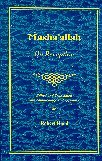
ON RECEPTION - Masha'allah, translated & edited by Robert Hand, $18.95
Contents:

Introduction: Who is the real Masha'Allah? Masha'Allah's methods. The text.

Here begins the book of Masha'Allah on Reception:
1. What is reception?
2. Concerning whether a matter about which one has hopes will be accomplished or not
3. Concerning whether one who is ill will be delivered or will die
4. A question concerning an ill person
5. Concerning substance
6. Concerning substance which has been lent
7. An interrogation concerning things left by a certain dead person
8. Concerning kingship, whether it will be acquired
9. A question concerning kingship
10. A question concerning kingship
11. Concerning the discovery of the hyleg
12. A question concerning a high office

Appendix:
The charts of On Reception
Technical details

The dating of the charts; accuracy & zodiacal issues

Comment:

This book (known in Latin as de Receptione) is one of the earliest surviving Arabic astrological texts. It is also one of the few old texts that contain fully worked out sample charts, something this book shares with William Lilly's Christian Astrology. This book, along with Lilly's, are invaluable resources in reconstructing ancient horary techniques. To assist the reader, Hand gives an outline of Masha'allah's techniques in the introduction, and again in the appendix. In between is the full text of the original. It repays close study. (Notes adapted from the introduction, page ii.)

Arhat, 89 pages.


Read the book? Want to tell the world? How many stars (1-5) would you give this book? Tell us!

From R.V.:
This book is not restricted to horary astrology. Masha'allah gives a clear exposition of his aspectual theory, which is underlined in several of his books, be it genethliacal, horary or mudane. FIVE STARS.


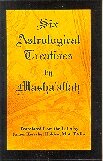
SIX ASTROLOGICAL TREATISES - Masha'allah, translated by James Herschel Holden, $24.95

Contents:

Translator's preface

The Book of Reception in Horary Questions

Translator's preface

The Book of Reception in Horary Questions

The reception & connection of the planets
Questions of the ASC
A question about the death or life of the querent
Another question about life
Questions of the second house
A question about money
A question whether he will have the wealth of a king or not
A question about the time of having the thing
A question about inheritance
A question of the tenth house
A question about good or evil
A question about a kingdom
A question about getting a kingdom
The life of a native
The years of alcochoden
A question by a certain duke
Index of persons
Bibliography

- 66 pages -
The Book of Nativities
Translator's preface

The Book of Nativities

1. Whether the child will live to be weaned or not
2. The hyleg is the knowledge of life: When the nativity of the child indicates life
3. The alcochoden, through which is known the computation of the length of life
4. How to know what the planets add or subtract
5. To know the will of the native
6. To know the good fortunes & misfortunes of the native as shown in his own nativity

Appendix: Twelve nativities
Index of persons
Bibliography

- 40 pages -
The Book on the Revolution of Years
Translator's preface

The Book on the Revolutions of Years

1. The revolutions of the years of the world
2. The knowledge of the rulers of the year
3. When the ruler of the year commitsits disposition to another planet
4. The significator of the king & his subjects
5. The significations of aspects and of the ruler of the year and of the rest of the significators
6. The severity of the revolutions of the years of the world
7. A chapter on fear for the king
8. A question about war & which of two will win
9. A question about the impediment of mortality and in how many parts they are dying
10. The division of the world & the climes by the substance of the planets & signs
11. The signification of the ruler of the year and of each planet when it is the ruler of the year

Index of persons
Bibliography

- 35 pages -
The Book on the Significations of Planets in Nativities
Translator's preface

The signification of the planets in their own signs & in the signs of other planets
1. The signification of Saturn
2. The signification of Jupiter
3. The signification of Mars
4. The signification of the Sun
5. The signification of Venus
6. The signification of Mercury
7. The signification of the Moon

The significations of the of one house in the other houses
8. The signification of the ruler of the ASC in the twelve houses.
9. The signification of the ruler of the 2nd in the twelve houses.
10. The signification of the ruler of the 3rd in the twelve houses.
11. The signification of the ruler of the 4th in the twelve houses.
12. The signification of the ruler of the 5th in the twelve houses.
13. The signification of the ruler of the 6th in the twelve houses.
14. The signification of the ruler of the 7th in the twelve houses.
15. The signification of the ruler of the 8th in the twelve houses.
16. The signification of the ruler of the 9th in the twelve houses.
17. The signification of the ruler of the 10th in the twelve houses.
18. The signification of the ruler of the 11th in the twelve houses.
19. The signification of the ruler of the 12th in the twelve houses.

The signification of the planets in their own terms or in those of another planet
20. The significations of Saturn
21. The significations of Jupiter
22. The significations of Mars
23. The significations of Sun
24. The significations of Venus
25. The significations of Mercury
26. The significations of Moon

Index of persons
Bibliography

- 41 pages -
The Epistle on Conjunctions
Translator's preface

1. An account of the circle & the stars
2. The diversity of the imprints of the work of the stars on the regions of the world
3. The natures of the signs
4. The revolution of the years
5. The eclipses of the Moon & their signification
6. Changes of the weather caused by changes of the planets in the signs of the planets
7. The eclipses of the Sun & their signification
8. The conjunction of all the planets & their effects
9. The conjunction of the planets & its action
10. The major conjunctions
11. The middling conjunctions
12. The minor conjunctions

Index of persons
Bibliography

- 19 pages -
The Book of Thoughts & Interpretations
Translator's preface

The book of thoughts

On interpretation

- 13 pages -

Comment:

The first of the six books in this volume deals with reading an horary chart by reception of the rulers. I have long wanted to see an horary technique like that. Masha'allah works out numerous questions by this technique.

The second book, on Nativities, is based on Dorotheus of Sidon's book, in that it uses triplicity rulers in delineation. Masha'allah delineates the same twelve charts as given in Dorotheus, which are also delineated by Abu Ali in Judgments of Nativities. (It is indeed gratifying that all of these books are again in print. It was not so long ago that none of them were even in translation.)

The third book, on Revolutions, concerns the annual ingress of the Sun into Aries, which is mundane astrology. I have long wanted to see an early book on mundane. For openers, Masha'allah says if the ascendant ruler is in a bad way, the year will not go well. On the other hand, if the sun makes a favorable aspect to the ascendant, the year will be good.

The third book deals with climes, and as climes have been mysterious to me, I Wickied it. Climes are bands of longitude based on the longest day of the year (summer solstice), in half-hour intervals. Here in Bel Air, latitude 39N32, the longest day of the year is 14h46m from sunrise to sunset, which puts us in the 6th of 33 climes, but in the system of seven climes, we're in the 4th or 5th (Wiki is fuzzy). According to Masha'allah, the fourth clime is ruled by the Sun, the fifth by Venus. Since the ascendant is based on latitude, climes were a crude, early way of working it out. (The MC is determined by time, while precise definition of intermediate cusps had to wait until a system of numerical notation had been devised that would enable them to be calculated.) Once upon a time the exact latitudes for each clime were known, but modern researchers have not paid them any attention, so far as I can tell. This is a pity. Climes had rulers. Ptolemy divided climes with quadrants, the result was his system of astrological rulerships of the various regions of the world. It would be nice to reconstsruct & update that.

We get a glimpse of Masha'allah's clients in his attention to the ruler of the year & the king's fate. In the first book, on horary, there were a series of questions concerning kings. By contrast, William Lilly, who wrote the great textbook on horary, did not have a king for a client. This book is brief & to the point.

The fourth book in this volume, The Signfication of the Planets in the Nativity, starts off with delineations of planets in the signs of other planets. Instead of delineations of Saturn in Aries, Saturn in Taurus, Saturn in Gemini, Masha'allah gives us Saturn in the domicile (signs) of Saturn, Saturn in the domiciles of Jupiter, Saturn in the domiciles of Mars, etc. The next section gives the rulers of the various houses, in the other houses. These are both short & to the point.

The third section, on the planets in the various terms of the planets, has to do with planetary periods. Regrettably, neither the author, nor the translator, state just what sort of periods these may be. I presume they're Firdaria. Which always struck me as crude, as day births all start with the Sun, night births all start with the Moon, and then proceed through the other planets in strict order & time periods. Which means to customize Firdaria, you must consider the sign, house & dispositor of the planet whose period it is. Which requires skills I do not have, alas.

The fifth book is on the Conjunctions of Planets. Which includes Superior (Jupiter/Saturn), middling (Saturn/Mars) and minor (Jupiter/Mars) conjunctions, as well as eclipses. The treatment is brief.

The final book is The Book of Thoughts as well as On Interpretation. The first is how the horary chart may reveal the intentions of the Querent, not merely give the outcome of his question. Interpretation is but two paragraphs, cautioning the astrologer to ensure his sundial or astrolabe is correct, that he not fail for silly reasons.

AFA, 220 pages.


Read the book? Want to tell the world? How many stars (1-5) would you give this book? Tell us!


CHRONOLOGY OF THE ASTROLOGY OF THE MIDDLE EAST & WEST BY PERIOD - Robert Hand, $4.95
Contents:

Preamble
1. Early period
2. Early Greek period
3. Hellenistic period
4. The Roman era
5. The Byzantine period
6. The classical period in the middle east
7. The Arabic era
8. Latin period - medieval
9. Renaissance
10. The English period & the decline

On the early roots of horoscopic astrology

Bibliography

Comment:

This short monograph is intended to give a rough idea of the times & order of the major developments in the history of astrology, a list of major astrologers, and some historical background. The basic astrological impulse, the desire to correlate celestial & terrestrial events was nearly universal among ancient peoples. A distinguishing mark of modern astrology is that celestial phenomena can be computed in advance so that events may be anticipated in advance. In order to do this it was necessary to observe heavenly movements for a long time so they could, eventually, be calculated in advance. As far as we can tell, only one group of ancient peoples actually did this, the various people who lived in Mesopotamia (modern Iraq), among them, the Babylonians, Chaldeans, Assyrians & Sumerians. These people were the most likely to have invented astrology as we know it. The chronology runs starts at 4000 BC & ends in 1770 AD. Following that is the essay, On the Early Roots of Horoscopic Astrology. Hand himself says that he has not considered the early history of Hindu astrology. (Notes adapted from the preamble, pgs 1-2.)

Arhat, 35 pages, small stapled book.


Read the book? Want to tell the world? How many stars (1-5) would you give this book? Tell us!


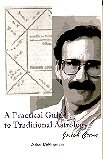
A PRACTICAL GUIDE TO TRADITIONAL ASTROLOGY - Joseph Crane, $20.00
Contents:
Introduction: What astrology gains by exploring its traditions, Differences between modern & traditional astrology, The background of traditional astrology

1. Traditional planetary dignity & disposition: Dignity & disposition, Domicile rulers, Planetary sect influence on domicile rulers, Planetary exaltation & fall, Triplicities & planetary rulers, Using triplicities for disposition, Using triplicity rulers for a planet's dignity, Terms or bounds & faces, Peregrine planets, Determining the main dispositor, Chart example: Thomas Merton

2. Angles & Houses: Ancient & modern uses of houses, Whole sign houses, Houses as indicators of planetary strength, Pivots, post-ascensions & declines, Aspects to the ascending sign, More on whole sign houses, Shall we try whole sign houses?, House definitions: ancient to modern, Postscript: Phil Gramm & his planetary periods

3. Aspects in Helenistic & Medieval astrology: Aspects & modern astrology, Traditional use of aspects, whole signs, entire degrees, The "Ptolemaic" aspects, The geometry of the circle, Meanings of aspects, None of the above - the Aversions, Exceptions to signs in Aversions, "Looking ahead" & "hurling rays", Other ways of aspecting, From the Hellenistic to the Medieval era, Orbs of planets, orbs of aspect, Joining & separating, Reception: combining joining & disposition

4. Planets as significators in ancient astrology: Planets: Meaning & use, Planets, intrinsically, A sample astrology lesson, Significators in the natal chart, Planets as natural significators: Love & marriage, Derived significators, Planetary lord of "soul" - Character or personality style, The planetary lord of action or career

5. Planetary sect: A brief history of sect, What is planetary sect?, Planets by sect: diurnal & nocturnal, Four qualities (dry, hot, wet, cold), Masculine & feminine, Determining chart & planetary sect, Planets & signs

6. The phases of the planets: Diurnal & zodiacal motion together, Heliacally rising & setting in east, Heliacally rising & setting in the west, Helical rising & setting as indicators of planetary strength, Oriental & occidental - the medieval tradition, Minor accidental dignities & debilities, Young & old, early & late, Temperament & complexion, Oriental & occidental quadrants: the Greek tradition, Ascendant & solar quadrants, Complete phases of planets with the sun, Qualities & phases, Oriental, occidental, retrograde, under the beams, Phases with the sun & significations for the soul.

Comment: This book began as a series of articles published in The Mountain Astrologer in 1995-6. The author writes, In this book I explain to the modern astrologer some of the best ideas & techniques from the natal astrology of the past. You can apply this information to your natal chart & the charts of others to gain new insights & methods. I also hope thast you will use it to learn more about the origin of astrology, its history & potential (pg. i)

Of this book, Robert Hand writes, Our first secondary source work, A Practical Guide to Traditional Astrology is a first must read for all astrologers. Crane is empowered with an understanding of both ancient & modern technique that is difficult to master, and for this he deserves much respect.

An excellent book. See his equally impressive second book, Astrological Roots The Hellenistic Legacy.

Arhat, 110 pages, paper.


Read the book? Want to tell the world? How many stars (1-5) would you give this book? Tell us!


WHOLE SIGN HOUSES: THE OLDEST HOUSE SYSTEM - Robert Hand, $10.00
Contents:

Preface

The oldest house system:
Whole sign houses
The notion of place or Topos
The horoscope
"Plaecs" aspecting the horoscopic sign
Angular houses versus "malefic" aspects
The origin of "benefic" and "malefic" aspects
Historical development
The problem of Julius Firmicus Maternus
The advent of the modern type of house system
A modern solution to the midheaven problem
The modern practice with whole sign houses
Whole-sign houses or places computed from lots
The whole sign house "cusps"
Examples
Conclusions
Chart data & sources

Appendicies:
1. Horary astrology & whole sign houses
2. Glossary of terms
3. Are only the major (Ptolemaic) aspects valid?

Index

Comment:

In the whole sign house system, the degree of the zodiac found on the ascendant is not the beginning of the first house, which extends before as well as after the cusp. The first house - and all the other houses in the chart - start with 0 degrees & end with 30 degrees of the sign in question. The degree on the cusp is the most intense point of the house. The degree on the other house cusps is generally taken to be the same as the ascending degree, eg, whole sign houses resemble equal houses, the difference is that equal houses start & end at the cusp, whole sign houses start at 0 degrees of the sign on the cusp & end 30 degrees later. This means the midheaven (MC) is unrelated to any house cusp, there are no intercepted signs nor intercepted houses. This small book is an expansion & revision of articles that originally appeared in The Mountain Astrologer in 1999.

Arhat, 48 pages, comb-bound.


Read the book? Want to tell the world? How many stars (1-5) would you give this book? Tell us!


Late Classical Astrology: PAULUS ALEXANDRINUS & OLYMPIODORUS, with the Scholia from later commentators - translated by Dorian Gieseler Greenbaum, $35.00
Contents:

List of tables
Foreword, by Robert Hand
Translator's Preface

Introductory matters:
1. Introduction to the 2nd edition
2. The twelve Zoidia
3. Bounds of five wandering stars
4. Faces in the 12 Zoidia
5. Seven stars and the Monomoria
6. Sect of the two lights
7. Quadrants
8. Zoidia which see one another
9. Those which command & obey
10. Trigons, hexagons, squares & diameters by figure
11. Zoidia unconnected to one another
12. Zoidia averse & sympathetic to one another
13. Like-engirding & equally-rising 12th parts which make figures
14. Phases the five stars make to the sun
15. Stations
16. Figures the Moon makes to the Sun
17. Separation & application the Moon makes to the wandering stars
18. Foreknowledge of winds
19. How many days of the gods there are
20. Which of the gods each day belongs
21. The star presiding & the one managing
22. Dodekatemoria
23. Seven lots in the Panaretus
24. Tabular exposition of the twelve places
25. Concerning children
26. Concerning what one does
27. Concerning the declines
28. Motion of the Sun & learning in what Zoidion & roughly what degree it is
29. How to calculate the Horoskopos
30. The midheaven
31. Year, month & day
32. Monomoiria by trigon
33. The indespensible degree of the Horoskopos through natural methods
34. Concerning crisis
35. Concerning the bond of the Moon
36. Concerning rulership
37. The nativity of the cosmos

Olympiodorus commentary on Paulus Alexandrinus
1. Quality of the figures & into what they are collected
2. Application & separation
3. Quality of the four figures
4. Unconnected & unfigured Zoidia
5. Equally-ascending & like-engirding
6. Those on the right & left
7. Ascending & declining
8. Appearances & settings
9. Morning rising, stations, evening settings
10. Risings, disappearances, additions, subtractions & wanderings
11. Concerning conjoining stars
12. Concerning stations
13. Whether the father or son is hurt
14. How the stations differ
15. Figures of the Moon
16. Figures of the Moon with respect to the stars
17. What kind of wind will blow
18. The lord of the day, the one presiding & the one managing
19. The Dodekatemoria of the seven stars
20. Concerning the Pivots
21. Concerning lots & their Dodekatemoria
22. The names of the seven lots & what it means

Beginning of the second section:
23. The 12 places, how they are called & what it means
24. Concerning children
25. Concerning what one does
26. Concerning the declines
27. On knowing what degree the Sun & Horoskopos are
28. Concerning the degree & through how much time each Zoidion is brough up
29. Concerning the year, month & day
30. Concerning a year
31. Concerning a month
32. Concerning a day
33. Concerning an hour
34. Concerning the Monomoiria by trigon
35. Concerning the indispensible degree of the Horoskopos
36. Concerning the given hour
37. Concerning the time of conception
38. Concerning crises
39. Concerning the bond of the Moon
40. Concerning the ruler & times of life

Appendices:
1. Categories of lots
2. The calendar used by Paulus & Olympiodorus
3. Charts used by Paulus & Olympiodorus

Bibliography
Index

Comment:

In the year 378, Paul of Alexandria (aka Paulus Alexandrinus) wrote an Introduction to astrology for his son, Cronamon. The second edition of this, along with various commentaries, is presented here. Chief among the commentaries are those of a man identified as Heliodorus, aka Olympiodorus, though his exact identity is unknown.

In this book: Lots (eg, Parts): Paulus gives not only the theory behind Lots, but the underlying rationale as well. Greenbaum says, "If you have ever wondered about the reasoning behind the Lot or Part of Fortune (to say nothing about any of the other lots), this book will provide the answer."

Dodekatemoria: This is similar to what we know as the 12th harmonic. This book tells you why it's important in a chart.

Application & Separation: More than what you might expect: The closer an applying aspect, the sooner in life its effects appear, for good or ill. Applications & separations made by the moon are particularly important. It's also important what a planet separates from & what it applies to.

Moon Phases: "The terminology used by these authors to describe the phases of the Moon is brilliantly instructive in learning more about how the Greeks perceived the Moon. Metaphors of birth & death abound in their descriptions. It is possible that until these writers we have not been able to understand or appreciate the importance the Greeks placed on the Moon & its phases." (Greenbaum)

Doctrine of Sect: You know about sect already, but here's an excerpt: "If also Mars [in the 6th] is not figured by benefics, it does not thus increase great evils, if it should not be contrary to sect. (italics: Greenbaum)

In his introduction, Rob Hand says, "We see in the combination of Paulus & Olympiodorus that late Greek Astrology was in fact much closer to early Arabic than has generally been recognized. While the Arabic tradition clearly picked up much from the Persian that was not to be found in the Greek tradition, some of the methods that achieved such prominence in the Arabic tradition are already found in the Paulus-Olympiodorus tradition. The two outstanding instances of this are the use of large numbers of Lots & at least the beginnings of the elaborate Persian-Arabic doctrine of Solar Revolutions. The Paulus-Olympiodorus material shows us much of the Greek tradition just before the Arabic invasions of the Byzantine empire carried Greek Astrology into the Middle Eastern world where it combined with Persian & Indian traditions, giving rise to the Arabic & later Latin medieval traditions of Astrology from which much of Western Astrology is descended." This book requires careful study, but will pay great dividends.

Arhat, oversize format, 177 pages, comb-bound.


Read the book? Want to tell the world? How many stars (1-5) would you give this book? Tell us!
From R.V.:
FOUR STARS. This book makes the reader wonder: is Hellenistic astrology a complete and closed theoretical corpus or only a initial stage of what Arabic astrology became? Answer by yourself.


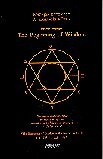
THE BEGINNING OF WISDOM - Avraham Ibn-Ezra, translated & annotated by Meira Epstein, edited with additional annotations by Robert Hand, $25.00
Contents:

Foreword, by Robert Hand
Introduction, by Meira Epstein

The Beginning of Wisdom:
1. The form of the wheel, its parts, signs & images, seven planets, elevation, strength, motion, rulership
2. Influence of the signs, their ascension, their effect, the co-mixture of the fixed stars & images
3. Aspects of the degrees, quadrants of the wheel, the twelve houses
4. Nature of the seven planets, their influence
5. Planets, their house position & aspects
6. Strength of planets based on orbital motion & position, also according to their position before or after the Sun
7. Aspects of planets among themselves, general rules regarding the mixture of their powers with one another
8. Judgements of planets in inquiries, nativities & revolutions
9. Lots of planets, lots of houses, other lots
10. Orb of light of the seven planets, the way they are directed, translation over the degrees fo the wheel, and what these indicate

Comment: From the front cover: The beginning of Wisdom is fear of the Lord. The author lived from 1089-1164, in Spain. This book dates from 1148 & was intended as a basic text-book of astrology. Like all surviving books of the period, it is extraordinary in many ways. Among the highlights in the book (as summarized in Robert Hand's introduction): Chapter 2, description of the faces of the zodiac. This is the original source for many of the degree symbol sets (eg, Charabel's) & was last published by Raphael over a century ago. There is also an exhaustive description of the 12 signs. Chapter 3, the uses of triplicity rulers with house cusps. Chapter 5, a detailed account of accidental dignities of the planets as they relate to the sun & other planets. Chapter 6 gives practical applications of this data, in particular, phases of the planets. Chapter 7 covers aspects, including application, conjunction, co-mixture, separation, solitary (eg, void), feral, transfer/collection/return of light, etc. Chapter 8, a collection of 120 aphorisms. Chapter 10, rules for directing, also Persian mundane & historical astrology (Persian astrology is largely lost). Arhat intends to publish more of Ibn-Ezra's work. Lavish notes, more notes, in fact, than original text.

Arhat, 158 pages.


Read the book? Want to tell the world? How many stars (1-5) would you give this book? Tell us!


BOOK OF NATIVITIES AND REVOLUTIONS - Avraham Ibn Ezra, translated by Meira Epstein, $24.95

Contents:

Introduction: About the Hebrew title: Sefer Ha'Moladot Ve'ha'Tequfot; The text & the manuscripts; Editing the manuscript; The translation; The contents; Where astrology meets religion & philosophy

Editorial notes by Robert Hand

The Book of Nativities and Revolutions:

Introductory matters: overall considerations before judgment

The equation of the nativity: Rectification - the Nimodar

The equations of Enoch: Rectification - the Trutine of Hermes; The months of pregnancy

The first house: Temperament; The ruler of the nativity; Physical appearance

The testimonies: The years of rearing; Characters & personality; The measure of life - by the years of the planets; The measure of life - by directions; The place of Abscission - cutting off of life

The second house: Sources & timing of material benefit & wealth; Ptolemy's Ages of Life; Additional considerations for wealth

The third house: Siblings; Faith

The fourth house: The father & his measure of life; Land & property; The end of the matter

The fifth house: Children; The number of children; Pleasure

The sixth house: Health; Slaves

The seventh house: Marriage of men; Marriage of women; Quarrels; Partnership

The eighth house: Death; Inheritance

The ninth house: Faith; Dreams - prophetic; Travel; Science & learning

The tenth house: The mother; Rank & honor; Profession & skills

The eleventh house

The twelfth house: Imprisonment & captivity; Enemies; Domestic animals

The Annual Revolution:

Computing the annual revolution using the day & time of birth

Step 1: Compute the incremental equatorial degrees for the ascendant

Step 2: Convert equatorial ascension degrees to ecliptic/zodiacal degrees

Step 3: Compute the day of the revolution in the lunar month

Step 4: Compute the day of the revolution in weeks

Step 5 Compute the temporal hour of the revolution; Example

Evaluation of the annual revolution - important considerations

Profection

The months: Sub-divisions into months in the profected year

The days: Planetary days & hours

The good signs: A brief discussion on elections

The directions: The geographical direction to consider in elections

The countries: Relocation considerations

The colors

Appendix A: Ibn Ezra's astrological works
Appendix B: Glossary: Astrological & astronomical terms found in Moladot; His astrological work

Bibliography & references

Comment: In the Introduction we learn that Ibn Ezra wrote his books on astrology while in Italy or France (1140-1160). This is the third of Ibn Ezra's books to be translated & published to date. The first was The Book of Wisdom (above), the second, The Book of Reasons. This was originally published by Project Hindsight, but I hope (September 2008) to have copies soon.

This book is an extensive look at houses. Such as, ever want to know about the sixth house & slaves? From pg. 52:

Know that this house signifies slaves, so if the ruler of the sixth house is in a conjunction or aspect with the ruler of the nativity, he will have slaves, and according to the aspect of the ruler [of the house] to the rising [degree] so you will judge whether they (the slaves) will be useful or cause damage.

If the ruler of the sixth house is in the tenth house, it indicates that the native will [be] controlled by his slave in his mind and in his money, if the ruler of the sixth house is in one of the signs of human form, his slaves will be obedient; if the sign is male, it indicates that the male [slaves] are better for him than the female ones, and the opposite if it is in a female sign.

Al Kindi said: Always observe the sixth house and the place of its ruler and the place of Mercury, which signifies slaves, and the Lot of the Slaves, and see which is the [strongest] ruler of these places, and according to strength you will judge.

Al Andruzagar said: The first ruler of the triplicity of the sixth house indicates the deformities, the second ruler of the triplicity [indicates] the ailments, and the third ruler of the triplicity [indicates] the slaves.

A quick glance indicates that Al Andruzager gives triplicity indications for all twelve houses. Which I had never seen before. Blend that with the actual sign & planet & you would have something fabulous. Many wonderful things in this book.

Arhat, 116 pages.


Read the book? Want to tell the world? How many stars (1-5) would you give this book? Tell us!


THE BOOK OF REASONS - Avraham Ibn-Ezra, translated by Meira Epstein, edited by Robert Hand: Project Hindsight Hebrew Track, volume 1, $25.00

Contents:

Introduction, by Meira Epstein

The Book of Reasons

Comment: In the Introduction, the translator writes:

The Book of Reasons, which I have chosen to translate, is a commentary and additional material for the Book of Wisdom. The topics covered here follow more or less the order of the chapters in B.O.W., providing more in-depth discussion for those who already know the basics. From a dedication at the end of the book, we know he wrote it for one Yohanan Ben David who may have been his patron and friend. He was also a student of astrology, as can be seen in some phrases in the text where the author addresses him in the second person in a didactic way.

Ibn Ezra was well-versed in the different astrological theories and sources. He knew his predecessors and compared their ideas, quite frequently coming up with his own conclusions. He quotes Aristotle and Hindu, Persian, and Arab astrologers, but most frequently he follows Ptolemy and his book the Tetrabiblos. In some cases he takes issue with him, too, giving his own reasons. This scholarly analytical approach is most evident in the Book of Reasons and is at times similar to the didactic style of the Talmudic literature. (pg. ii)

This was the very early days of the astrological revival, 1991. Elsewhere in her introductory notes, Epstein marvels at the new world opening in front of her & confesses confusion with it. Confusions which, I believe, she has long since resolved. She tells me there is more Ibn Ezra she wants to translate. I wish her all success.

This is the first time all three of her Ibn Ezra translations have been available for sale at one place. This is because Meira Epstein, uniquely so far as I know, kept copyright to her Hindsight translation. If I am mistaken, if there are other Hindsight translators from long ago who have copyright to their work, I am happy to give detailed instructions how you can publish them, or I would be happy to publish them myself. (You would keep your copyright.)

Published by the translator. 48 pages, which are single-sided leaves. Comb-bound, oversize format.


Read the book? Want to tell the world? How many stars (1-5) would you give this book? Tell us!


THE NATIVITY OF LEWIS, THE 14TH KING OF FRANCE - John Gadbury, $5.50
Contents:

The several circles of position of the Sun, Moon & Pars Fortuna
This nativity proved by accidents to be this prince's true nativity
A speculum of directions belonging to this nativity
A short general judgment upon this nativity
Of the qualities of the mind
A short collection of aphorisms which take place in this nativity
Some few remarkable revolutions belonging to this nativity
An Appendix
Postscript
Errata

Comment:

Originally published in 1680, this is a digitally edited & enhanced facsimile, similar in appearance to the Regulus Christian Astrology. Gadbury did many short monographs on famous contemporaries. Each is a fascinating study of chart delineation as practiced 300 years ago. He first erects Louis XIV's chart, then proves its validity with directions, gives the natal reading & judgments for each house. He follows with delineation of notable revolutions (eg, years) in Louis XIV's life & concludes with a brief astrological description of Louis XV, who at that time was 19 years old.

Arhat, 36 pages, small stapled paper.


Read the book? Want to tell the world? How many stars (1-5) would you give this book? Tell us!


THE CORRESPONDENCE BETWEEN THE RABBIS OF SOUTHERN FRANCE & MAIMONIDES ABOUT ASTROLOGY - Translated with annotations by Meira Epstein, $5.95
Contents:

Introduction: Sources for some of the background details

The letter of the rabbis of the south of France

Maimonides' response to the rabbis of southern France

Appendix

Comment:

Rabbi Moshe Ben Maimon, aka Maimonides, was born in Cordoba, Spain, in 1135. He eventually settled in Cairo, where he became the leading authority on religious matters, establishing the foundations of Jewish theology. He was famous far & wide. In 1194 he wrote a response to two letters sent to him by a group of rabbis in southern France. They wanted to know the validity of astrology as it related to the Jewish faith. Their letters contained many detailed questions. Maimonides ignored the first letter, replying only when prodded by the second. Maimonides's response ignored the details, going directly to a religious & philosophical discussion where he condemns astrology outright. These documents are an example of how astrology & religion differed in ancient times, and reminds us that the argument of fate vs: free will has never been resolved in the west.

Arhat, 21 pages, small stapled paper.


Read the book? Want to tell the world? How many stars (1-5) would you give this book? Tell us!


THE ABBREVIATION OF THE INTRODUCTION TO ASTROLOGY - Abu Ma'shar, edited & translated by Charles Burnett, $9.50
Known in the west as Albumasar, the author was born on August 10, 787 AD & died on March 9, 886. In his lifetime he was the leading astrologer in the Islamic world. The first chapter is on signs, the second on planets, the third on the 25 conditions of the planets, the fourth chapter is on the power & weakness of the planets & the corruption of the moon. Chapter five continues the discussion on planets, adding the lords of the days & hours. Chapter six is a brief description on the casting of Lots (eg, parts), giving both day & night rules. The final chapter is on the years of the planets. Extensive historical & technical notes by the author, G. Tobyn, G. Cornelius & V. Wells.

Arhat, 58 pages, small stapled paper.


Read the book? Want to tell the world? How many stars (1-5) would you give this book? Tell us!
From R.V.:
FIVE STARS. First of all, you must have this book. Then, after reading it for the fourth time, begin to make horary charts, to see the THEORY in PRACTICE. That is the only way you will see that this book is very useful.


The Astrology Center of America

207 Victory Lane, Bel Air, MD 21014
Tel: 410-638-7761; Toll-free (orders only): 800-475-2272

Home Author Index Title Index Subject Index Vedic Books Tarot E-Mail: Dave


Established 1993, The Astrology Center of America is owned & operated by David Roell.
This entire site (AstroAmerica.com) is copyright 1996, 1997, 1998, 1999, 2000 by William R. Roell.
All rights reserved.